
Where to Buy Video Games in Akihabara, New and Retro
Quick answer
Go to the big electronics stores (Yodobashi Camera Multimedia Akiba, Bic Camera AKIBA and Sofmap) for new games and consoles, and to Trader and Super Potato for second-hand and retro. Check compatibility with your system and TV, compare prices and ask about warranty before buying.
Key facts
- Yodobashi, Bic Camera and Sofmap have large sections for new consoles, games and accessories.
- Trader's main store sells second-hand games and also buys them.
- Visitors can shop tax-free when they spend ¥5,000 or more in one store on the same day.
For video games in Akihabara, split your shopping in two. For new releases, consoles and accessories, go to the big electronics stores such as Yodobashi Camera Multimedia Akiba, Bic Camera AKIBA and Sofmap. For second-hand and retro games, go to Trader and Super Potato. This guide explains what each one is best for and what to check before you buy. For more on games in the district, see our games and arcades guides.
How Akihabara became a video game district
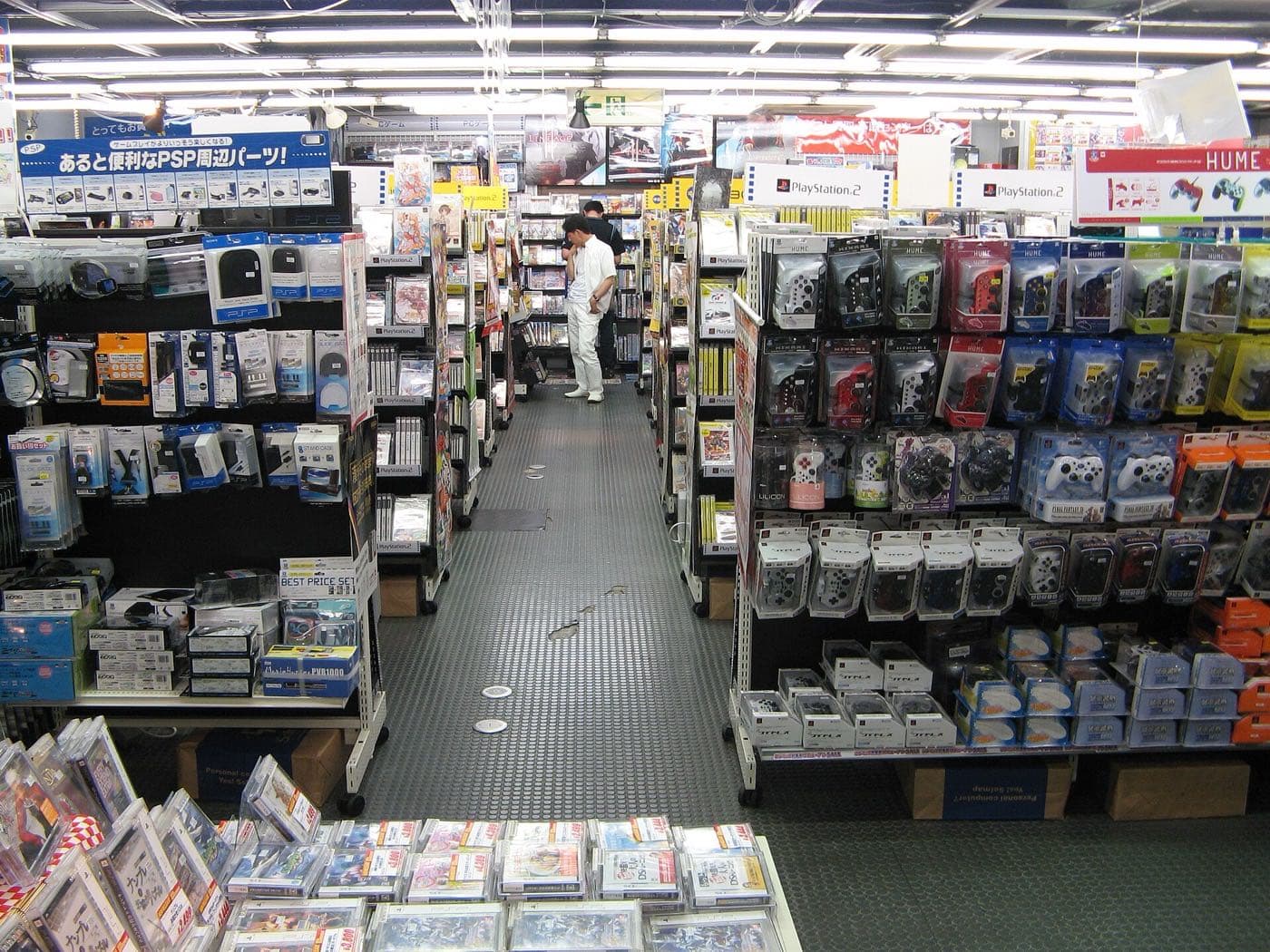
Akihabara started as Tokyo's market for radios and electronic parts after the Second World War. When home computers and consoles took off in the 1980s, the electronics shops began selling games too, and specialist game stores followed.
That history is why new and old sit side by side today: big stores selling the latest consoles a few minutes' walk from shops full of cartridges from forty years ago. Our guide to Akihabara's history tells the full story of how the district changed.
The best stores to buy video games
For new games and consoles: Yodobashi Camera Multimedia Akiba, next to the station, Bic Camera AKIBA and Sofmap all have large game sections with the latest consoles, games, controllers and accessories. They are the safest choice for new hardware, and staff are used to visitors.
For second-hand games: Trader is the big specialist. Its main store, an eight-floor building on Sotokanda, sells used Nintendo games on the ground floor and other consoles and media on the 2nd, and it also buys games, which keeps prices competitive. A second store sits under the JR tracks.
For retro: Super Potato fills three floors with classic consoles and games, from Famicom (the Japanese NES) cartridges to early PlayStation discs, and has a small retro game center on the top floor. Our guide to retro games in Akihabara covers it in detail.
Fans of anime merchandise based on games will also find plenty in the anime stores. Our guide to Akihabara for gamers puts all the stops together.
Tips for buying video games in Akihabara
A few checks save you from disappointment at home:
- Know what you want: retro collectors should head for Trader and Super Potato; for the latest releases, the big electronics stores are easier.
- Check compatibility: some Japanese games and consoles may not work with your system, TV or power supply back home. Ask the staff or check the box before you pay.
- Compare prices: bring a list with reference prices and check two or three shops before buying anything expensive.
- Ask about warranty: for consoles and accessories, check what the warranty covers and whether it applies outside Japan.
- Look into tax-free shopping: visitors can shop tax-free at participating stores when they spend ¥5,000 or more in one store on the same day. Bring your passport and ask how the store handles it.
- Time it with launches: big releases and events often bring limited editions and special displays. Check our events in Akihabara page before you go.
What buying games in Akihabara is like
Shopping for games here is part of the fun. Stores play trailers on big screens, shelves are packed from floor to ceiling, and glass cases show rare editions you will not see anywhere else.
Staff in the specialist shops usually know their stock well and can point you to a title or a limited edition, even if you only share a few words of English. You will also see groups of friends hunting together and comparing finds, which makes the trip feel social even if you go alone.
Plan a couple of hours for the main stores, carry a sturdy bag and leave room in your luggage. With a list and a little patience, you can find both the newest release and the game you played as a kid.
Related guides
Best Arcades in Akihabara and What Each One Does Best
Akihabara's arcades now: GiGO Akihabara 3, Taito Station and Super Potato's retro floor, with hours, cashless payment and crane game tips.
AKIHABARA Gamers: What to Find on Each Floor
What AKIHABARA Gamers sells, its 7th-floor pop-up shops and basement card shop, Dejiko the mascot, and tips for fairs and limited goods.
Retro Consoles in Akihabara: Where to Buy Them
Where to buy retro consoles and games in Akihabara: Super Potato, Trader and Mandarake's vintage toys, plus tips on condition, prices and compatibility.