
Retro Consoles in Akihabara: Where to Buy Them
Quick answer
Start with Super Potato, three floors of retro consoles and games with a retro arcade on top, then Trader's main store for second-hand games. Make a list, check average prices, condition and compatibility with your TV and power supply, and compare a couple of shops before buying.
Key facts
- Super Potato fills the 3rd to 5th floors of its building, with a retro game center on the 5th.
- Trader's main store sells second-hand Nintendo games on the ground floor and other consoles on the 2nd.
- Check condition and compatibility before buying a Japanese console.
Akihabara is one of the best places in the world to buy retro consoles and games. Two stores do most of the work: Super Potato, with three floors of classic hardware and a retro arcade on top, and Trader, whose main store sells second-hand games across several floors. This guide covers where to go, what to check before you buy and how to get your finds home. For more shops, see our shopping guides.
How Akihabara became a retro game hub
After the Second World War, Akihabara became Tokyo's market for radios and electronic parts. As home computers and game consoles arrived in the 1980s and 1990s, many shops switched to games, and the district became the place where fans went for new releases.
Those same decades produced the consoles that collectors look for today, from the Famicom (the Japanese NES) and the Super Famicom to the Mega Drive and the first PlayStation. Many of them were sold here new, and plenty have come back to the shelves second-hand.
Today, buying retro games in Akihabara is part shopping trip, part museum visit. Even if you do not buy anything, walking past glass cases of boxed games is a good way to see how the hobby has grown.
The best shops for retro consoles
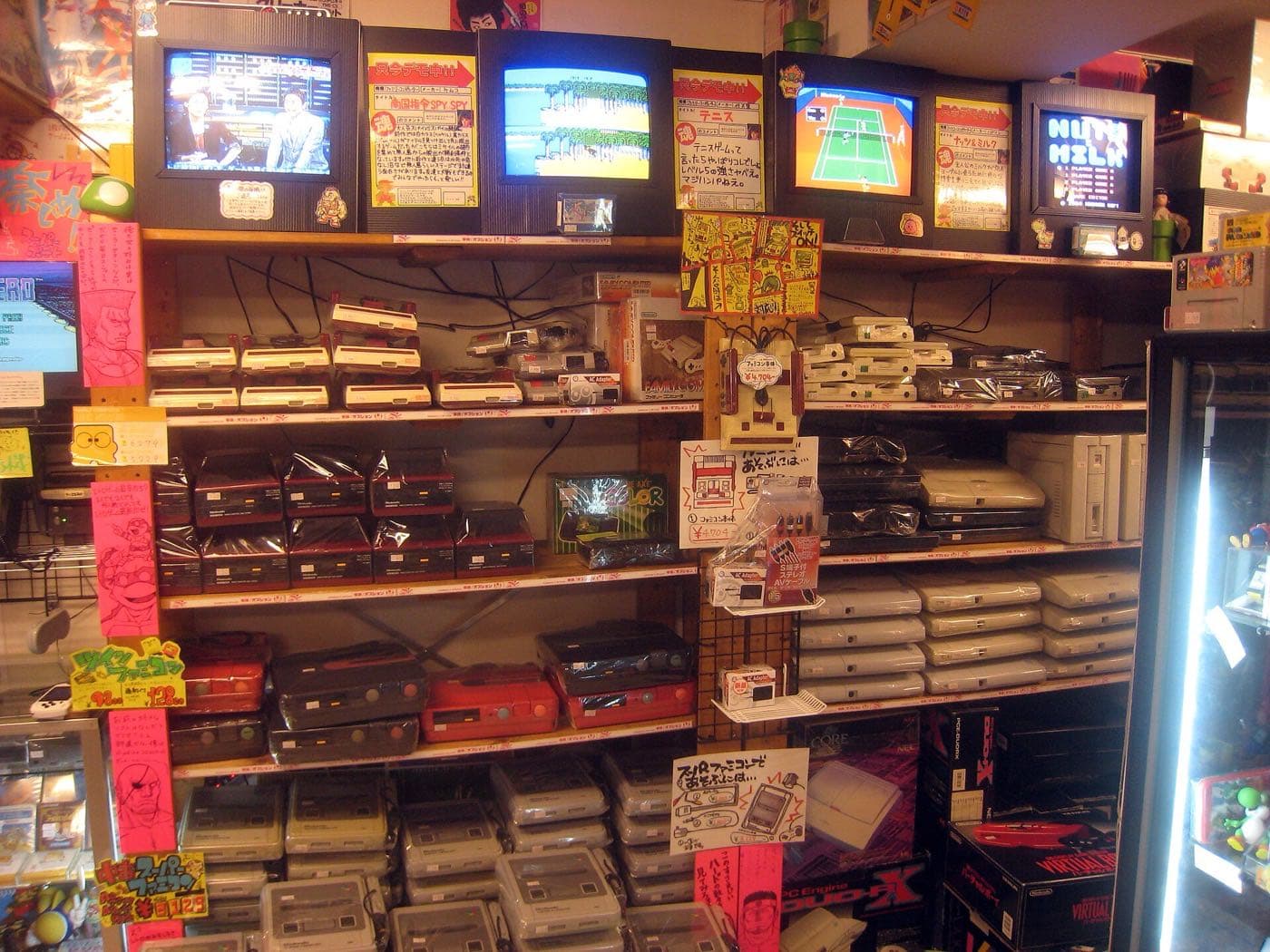
Super Potato is the classic first stop. It takes up the 3rd to 5th floors of a building on Sotokanda, with consoles, cartridges, discs and accessories for Famicom, Mega Drive, PlayStation and more, plus strategy guides and retro snacks. The 5th floor is a small retro game center with classic arcade cabinets and a rest area, so you can play a few coins' worth before you shop.
Trader is the other big name. Its main store, in a newer eight-floor building on Sotokanda, sells second-hand games over several floors: Nintendo titles on the ground floor and other consoles and media on the 2nd. Trader also has a second store under the JR tracks. It buys and sells, so prices are often competitive.
Mandarake Complex is not a game shop, but its toy floors are full of vintage figures, model kits and robot toys from the same era. If you collect retro merchandise as well as games, it is worth a stop. Our guide to the best anime stores in Akihabara has more on Mandarake.
Smaller independent shops come and go in the side streets around Chuo-dori (Akihabara's main street). Some are excellent, but check recent reviews before planning a trip around one.
Tips for buying retro consoles
Retro shopping in Akihabara can be overwhelming, so go in with a plan:
- Make a list: decide which consoles and games you want before you go, so you do not get lost in the shelves.
- Know the prices: look up what your targets usually sell for. Prices for classic games have risen with international demand, so a quick check helps you spot a fair deal.
- Check the condition: shops usually label whether a game is boxed, has its manual and works. Ask the staff if anything is unclear.
- Compare shops: stock and prices vary a lot between stores, so visit two or three before buying anything expensive.
- Check compatibility: Japanese consoles and games may not work with your TV, power supply or console back home. Make sure you know what you need before you buy.
Our guide to buying video games in Akihabara covers new releases and the big stores too.
Retro gaming culture in Akihabara
Retro games in Akihabara are more than collectibles. Playing on original hardware is part of the culture, which is why Super Potato keeps a floor of arcade cabinets, and why you will see fans of every age comparing finds in the shops.
Plenty of visitors come just to look. Shop windows and glass cases show rare boxed games and consoles, and many shops sell the soundtracks, guides and merchandise that went with them.
If you want to play rather than buy, the retro floor at Super Potato is the easiest place to start. Our games and arcades guides cover more places to play.
Plan your retro game trip
A few practical tips:
- Go on a weekday if you can: weekends are busier, and narrow shop aisles fill up quickly.
- Allow time: browsing Super Potato and Trader properly takes a couple of hours.
- Carry some cash: big stores take cards, but some smaller shops may not.
- Bring a sturdy bag: consoles are bulky, so leave room in your luggage and pack them carefully for the trip home.
- Set a budget: rare items are tempting. Our Akihabara budget guide helps you decide how much to set aside.
With a list, a budget and an afternoon, you can come home with the console you always wanted, and maybe a few games you did not know existed.
Related guides
Best Arcades in Akihabara and What Each One Does Best
Akihabara's arcades now: GiGO Akihabara 3, Taito Station and Super Potato's retro floor, with hours, cashless payment and crane game tips.
AKIHABARA Gamers: What to Find on Each Floor
What AKIHABARA Gamers sells, its 7th-floor pop-up shops and basement card shop, Dejiko the mascot, and tips for fairs and limited goods.
Where to Buy Video Games in Akihabara, New and Retro
Where to buy video games in Akihabara: big electronics stores for new releases, Trader and Super Potato for used and retro games, plus buying tips.